
Ever wondered what it *really* takes to make it in the fast-paced world of finance beyond the big headlines? It’s easy to get lost in the jargon and high-level economic reports, but trust me, there are hidden gems of wisdom out there, especially when you connect with someone truly in the trenches.
I’ve always believed that the most valuable career advice, the kind that genuinely helps you future-proof your path, comes not from textbooks, but from real people doing real jobs, navigating real challenges every single day.
That’s why I’m absolutely thrilled to share a special sit-down I had with a seasoned credit analyst, someone who has a front-row seat to the economic shifts affecting everything from small businesses to global markets.
This isn’t just about crunching numbers; it’s about understanding the very pulse of the economy and building a career that’s not only stable but genuinely impactful in today’s rapidly evolving financial landscape.
If you’ve been curious about breaking into finance, or even just making better sense of the daily financial news, you are in for an absolute treat. This deep dive will offer you an unparalleled look into what makes this role so crucial, the surprising skills that truly set you apart, and even a glimpse into where the industry is headed next, straight from the source.
Get ready to uncover insights you won’t find anywhere else. Let’s get the full scoop on navigating the intricate world of credit analysis!
Demystifying the Daily Grind: What a Credit Analyst Really Does

It’s easy to imagine a credit analyst’s life as a never-ending cycle of staring at spreadsheets and crunching numbers until your eyes glaze over. And sure, there’s definitely a good bit of that involved!
But when I sat down with my seasoned contact, what truly surprised me was the depth and variety of their day-to-day. They emphasized that it’s not just about what’s *on* the balance sheet, but understanding the story *behind* it.
We’re talking about digging into a company’s operations, market position, management quality, and even the broader economic outlook. It’s a bit like being a financial detective, piecing together clues from various sources to form a complete picture of risk.
My contact shared how they spend a significant portion of their time talking to clients, management teams, and even industry experts. This isn’t a solitary role; it’s highly collaborative and requires a knack for communication, not just calculation.
I’ve personally found that the ability to articulate complex financial situations in plain English is a superpower in any finance role, and it’s absolutely critical here.
This role demands a blend of rigorous analytical thinking and genuine human interaction, which, frankly, I find incredibly refreshing in an industry often perceived as purely quantitative.
It’s about being able to see both the forest and the trees, and then explaining what you’ve seen to others.
Beyond the Numbers: The Art of Due Diligence
The Human Element in Risk Assessment
Cultivating the Unseen Strengths: Skills That Truly Differentiate You
We often hear about the need for strong analytical skills, attention to detail, and a solid understanding of financial modeling for anyone wanting to break into finance.
And yes, those are absolutely non-negotiable foundations for a credit analyst. But from my conversation, it became clear that the truly impactful analysts possess a suite of less-talked-about, yet critically important, soft skills.
My contact mentioned how crucial critical thinking is – not just finding the answer, but questioning the data, looking for biases, and challenging assumptions.
It’s about asking “why” repeatedly until you get to the root cause of a financial trend or a company’s performance. I’ve personally experienced how easy it is to just take data at face value, but the real insights come when you dig deeper.
Another gem shared was the importance of storytelling. You might analyze a company for weeks, build an intricate model, and uncover groundbreaking insights, but if you can’t present that information clearly, concisely, and persuasively to a credit committee or a client, it’s all for naught.
It’s about translating complex financial jargon into actionable advice. They also highlighted resilience; not every deal goes through, not every analysis is perfect on the first try, and the ability to learn from setbacks and keep moving forward is paramount.
These aren’t skills you learn from a textbook, but rather through experience and a genuine desire to continuously improve your craft.
Mastering the Art of Financial Storytelling
The Power of Intellectual Curiosity
Navigating the Shifting Sands: The Evolving Landscape of Credit Risk
The world of finance is anything but static, and credit analysis is right at the heart of its most dynamic shifts. My contact really emphasized how much the environment has changed even in their tenure.
Back in the day, the focus was primarily on historical financial performance and tangible assets. Now, with the rapid pace of technological innovation and increasing globalization, credit risk has become far more nuanced.
We’re talking about factoring in cybersecurity risks, supply chain vulnerabilities, environmental, social, and governance (ESG) factors, and even geopolitical instability.
I’ve always been fascinated by how macro trends ripple down to affect individual businesses, and this role truly puts you in a position to see those connections firsthand.
My contact mentioned that understanding these broader, often qualitative, risks is becoming just as important as the quantitative analysis. It’s no longer enough to just look at a company’s past; you need to be able to anticipate its future challenges and opportunities within a rapidly evolving global context.
This means credit analysts need to be continuous learners, staying abreast of everything from new industry regulations to emerging technological disruptions.
It’s a challenging but incredibly stimulating aspect of the job, keeping you constantly on your toes and expanding your perspective on how the world works.
The Rise of ESG and Intangible Assets
Adapting to Digital Disruption and Geopolitical Volatility
Beyond the Report: The Tangible Impact of a Credit Analyst’s Work
It’s easy to get caught up in the details of financial models and due diligence, but what really resonated with me during our conversation was the profound impact a credit analyst has.
My contact described their role not just as gatekeepers of risk, but as facilitators of growth. Think about it: without accurate credit assessment, banks couldn’t confidently lend to businesses, whether it’s a small startup needing working capital or a multinational corporation funding a new expansion.
This means credit analysts are indirectly supporting job creation, innovation, and economic development. I’ve always believed that finance, at its best, serves as the lifeblood of the economy, and this conversation really underscored that point for me.
They shared stories of how their careful analysis helped a promising local business secure the funding it needed to thrive, or how their early identification of a potential risk prevented significant losses during an economic downturn.
It’s not just about crunching numbers; it’s about making informed decisions that have real-world consequences for businesses, employees, and the broader economy.
This tangible impact, knowing that your work contributes to something bigger, is incredibly rewarding.
Fueling Economic Growth and Innovation
Safeguarding Against Financial Instability
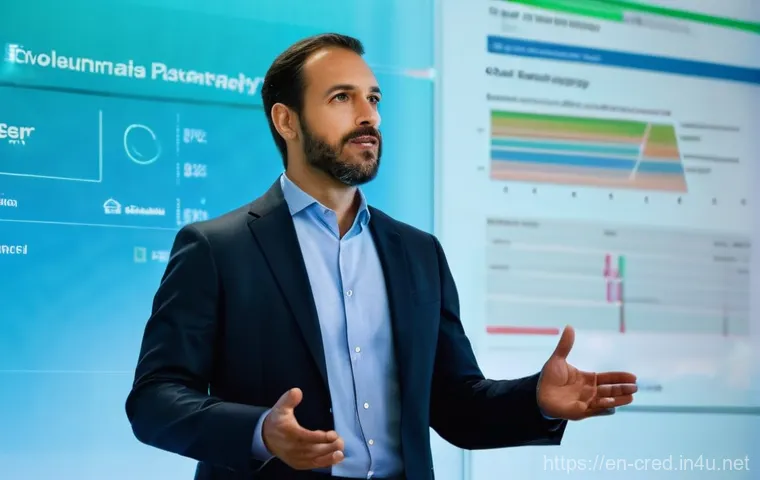
Forging Your Path: Diverse Career Avenues in Credit Analysis
When I first considered a career in finance, I sometimes felt pigeonholed into very specific, narrow roles. But my discussion with the analyst opened my eyes to the surprisingly diverse career paths available within and stemming from credit analysis.
It’s not just a terminal role; it’s a fantastic launching pad for numerous opportunities. My contact explained that many credit analysts transition into roles like portfolio management, where they manage a collection of investments; risk management, focusing on broader enterprise-wide risks; or even investment banking, particularly in debt capital markets.
The rigorous analytical training and deep understanding of business fundamentals you gain are incredibly transferable. I’ve always advocated for building a foundational skill set that can open multiple doors, and credit analysis certainly fits the bill.
Some even move into consulting, leveraging their expertise to advise companies on financial health and strategy. The critical thinking, due diligence skills, and industry knowledge are highly valued across the financial services sector and beyond.
It truly feels like a passport to a wide range of exciting and impactful roles, allowing you to continually evolve your career trajectory based on your interests and strengths.
Credit Analysis as a Career Launchpad
Beyond Banking: Leveraging Your Expertise
Cultivating Longevity: Future-Proofing Your Role in a Dynamic Sector
In an era where AI and automation are constantly making headlines, it’s natural to wonder about the future of roles like credit analysis. My contact addressed this head-on, offering a really reassuring perspective that I wanted to share.
While some of the more routine, data-entry aspects might indeed become automated, the core of the credit analyst’s role – judgment, critical thinking, understanding complex qualitative factors, and human interaction – is irreplaceable.
They believe that technology will actually empower analysts, freeing them from mundane tasks to focus on higher-value activities. It’s not about being replaced, but about evolving with the tools available.
I’ve personally seen this trend in many industries; technology often augments human capabilities rather than eradicating them. The key, they stressed, is continuous learning.
Staying updated on new financial products, regulatory changes, and especially technological advancements like data analytics and machine learning will be crucial.
It’s about embracing change and seeing new tools as allies, not adversaries. By focusing on developing those uniquely human skills – the ones that require empathy, intuition, and nuanced understanding – credit analysts can ensure their roles remain vital and impactful for decades to come.
AI as an Ally, Not a Replacement
Lifelong Learning: The Ultimate Career Shield
| Key Skill Area | Why It Matters for Credit Analysts | How to Develop It |
|---|---|---|
| Financial Acumen | Essential for interpreting financial statements, cash flow, and valuation models. | Degrees in Finance/Accounting, CFA, specialized courses, practical experience. |
| Critical Thinking | Goes beyond numbers to assess underlying risks, challenge assumptions, and identify inconsistencies. | Case studies, debating diverse viewpoints, asking probing questions, independent research. |
| Communication & Presentation | Crucial for clearly articulating complex findings to stakeholders and influencing decisions. | Public speaking, report writing, presentation practice, networking. |
| Industry & Market Knowledge | Understanding sector-specific trends, regulatory environments, and competitive landscapes. | Reading industry reports, financial news, following economic indicators, informational interviews. |
| Relationship Management | Building trust with clients and internal teams to gather information and collaborate effectively. | Networking, mentorship, team projects, customer-facing roles. |
Concluding Thoughts
Diving into the world of credit analysis through these conversations has been truly enlightening, and I hope it has been for you too. It’s clear that while the numbers are the foundation, the true art lies in the human judgment, the keen eye for detail beyond the balance sheet, and the ability to weave a compelling financial story. This isn’t just a job; it’s a dynamic career that challenges you to be a perpetual learner and a critical thinker. What truly strikes me is how this role, often seen as purely quantitative, is deeply intertwined with understanding human behavior, market dynamics, and the broader economic narrative. It’s a powerful position to be in, directly influencing economic health and growth, and I’m genuinely excited about its future.
Useful Information to Know
1. If you’re looking to step into this field, start by building a robust foundation in accounting and finance. Degrees in these areas or certifications like the CFA can significantly boost your credibility and understanding. Don’t underestimate the power of a solid financial modeling course; being able to build and interpret models is a core competency that will serve you well. Many top universities offer executive education or specialized programs that can fast-track your learning in specific areas of credit analysis, such as corporate credit or structured finance.
2. Networking is incredibly powerful in finance, and credit analysis is no exception. Attend industry events, reach out to professionals on LinkedIn, and don’t be afraid to ask for informational interviews. I’ve personally found that most people are more than willing to share their experiences and advice. These conversations can provide invaluable insights, open doors to mentorship opportunities, and even lead to job prospects you might not discover otherwise. Building genuine connections can illuminate paths you hadn’t even considered.
3. Develop your soft skills, especially communication and critical thinking. Being able to articulate complex financial situations clearly and persuasively, whether in writing or in person, is a game-changer. Practice dissecting case studies, challenging assumptions, and forming well-reasoned arguments. Join a public speaking club or take a business writing course; these seemingly unrelated skills will directly enhance your effectiveness as a credit analyst. It’s about translating data into actionable intelligence for decision-makers.
4. Stay relentlessly curious about global economic trends, technological advancements, and industry-specific news. Read financial publications daily, follow reputable economists and industry leaders, and understand how geopolitical events can impact credit risk. The financial landscape is constantly evolving, and a curious mind that embraces lifelong learning is your greatest asset. Subscribing to industry newsletters and market research reports can keep you ahead of the curve and provide a deeper context for your analyses.
5. Consider exploring internships or entry-level roles in related areas like commercial banking, corporate finance, or even financial planning. These experiences can provide a practical understanding of business operations and financial health, which are directly transferable to credit analysis. Even a short stint in a client-facing role can give you invaluable perspective on how businesses operate and what their real financial needs are, making your credit assessments more empathetic and accurate.
Key Takeaways
Ultimately, the journey of a credit analyst is far richer and more nuanced than just numbers. It’s about being a financial detective, a skilled communicator, and a lifelong learner. The heart of the role lies in human judgment, discerning the ‘story’ behind the figures, and anticipating future challenges. Furthermore, the profession offers a robust launchpad for diverse career paths within the financial sector and beyond, constantly evolving with technology rather than being replaced by it. Embracing critical thinking, honing your communication, and maintaining a curious mind are not just advantages but necessities in this dynamic field. Your work as a credit analyst directly contributes to economic stability and growth, making it a profoundly impactful and rewarding career choice.
Frequently Asked Questions (FAQ) 📖
Q: So, what does a credit analyst really do day-to-day? Is it just endless spreadsheets and number crunching, or is there more to it than meets the eye?
A: Oh, trust me, I used to think it was all about dry, dusty ledgers too! But after chatting with my friend in the field, I realized it’s so much richer and more dynamic than that.
While yes, numbers are the foundation, a credit analyst’s real magic lies in becoming a detective, a storyteller, and a bit of a futurist all rolled into one.
They spend their days diving deep into financial statements, of course, but also researching industries, understanding market trends, and even meeting with company management to truly grasp their business model and future prospects.
It’s like piecing together a complex puzzle, evaluating risks, and ultimately, making a well-informed decision about whether a loan or credit line is a good bet.
My friend emphasized how much she enjoys the investigative aspect – really getting to know a business, its potential, and the human element behind the figures.
It’s far from just staring at a screen; it’s about understanding the very pulse of the economy through the lens of individual businesses and how they’re performing.
Q: Beyond the technical skills, what are some of the surprising, perhaps overlooked, abilities that truly help a credit analyst stand out and excel in their career?
A: This is a fantastic question, and one I specifically pressed my analyst friend on! You might assume it’s all about advanced degrees and knowing every financial ratio by heart, and while those are crucial, the truly exceptional analysts possess a set of “soft skills” that are absolutely game-changers.
Top of her list was curiosity. Not just a superficial interest, but a genuine hunger to dig deeper, to ask ‘why?’ until you truly understand the nuances of a business, an industry, or an economic shift.
Another huge one is communication. It’s not enough to find the insights; you have to articulate them clearly, concisely, and persuasively to clients, colleagues, and senior management.
And here’s one that really resonated with me: empathy. Understanding a client’s business challenges, their market pressures, and their aspirations allows an analyst to not just assess risk, but to partner with them, offering solutions that make sense for both parties.
It’s that blend of sharp analytical prowess and profound human understanding that really sets the stars apart.
Q: For someone aspiring to break into credit analysis today, especially with the world changing so fast, what’s your most impactful advice for getting their foot in the door and truly thriving?
A: If I could give one piece of advice, fresh off my conversation, it would be to diversify your learning and lean heavily into networking. In today’s fast-evolving financial landscape, just having a finance degree isn’t enough.
My friend stressed the importance of understanding the broader macroeconomic picture – how global events, technological advancements, and even social trends impact businesses.
So, read widely, take online courses in data analytics or specific industry sectors that pique your interest, and consider certifications like the CFA if you’re serious.
But here’s the real kicker: talk to people. Go to industry events, connect with professionals on LinkedIn, and don’t be afraid to ask for informational interviews.
I’ve personally seen how much more impactful a heartfelt conversation can be than just sending out a hundred resumes. People want to help those who show genuine initiative and a passion for learning.
Once you’re in, thrive by continuously asking questions, being proactive in seeking out new challenges, and never losing that initial spark of curiosity.
The finance world is always moving, and staying ahead means always being ready to learn something new!